American Tuna
First Impressions: Bold, Playful, and Ready for Stitching
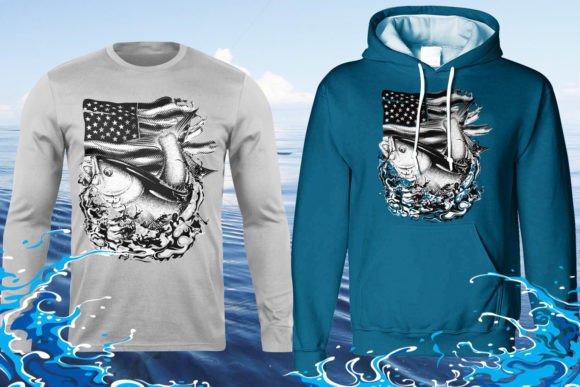
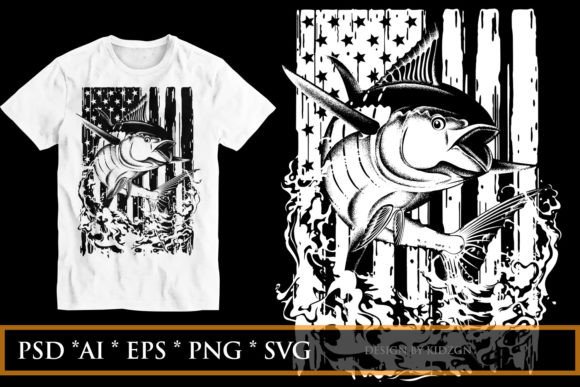
When I opened American Tuna for the first time, I didn’t see just another fish graphic—I saw a confident, slightly cheeky design with strong silhouette presence and clean internal structure. The shape is compact but expressive: rounded body, subtle fin curves, and a friendly eye that avoids cartoon cliché. It’s not overly detailed, which is a huge plus for embroidery. As a designer who’s stitched hundreds of logos and illustrations onto everything from baby onesies to boutique aprons, I immediately recognized its potential as a machine embroidery design that won’t fight the needle.
Real-World Test: A Custom Embroidered Tote for a Coastal Café Pop-Up
Last week, I used American Tuna on a natural canvas tote bag for a local café’s summer pop-up—think linen-textured fabric, medium weight, no stretch. I digitized it at 3.8" wide (centered on the front panel) and ran it on my commercial machine with medium tear-away stabilizer. The result? Crisp satin stitch along the outer edge, balanced fill stitch in the body, and zero thread breaks or puckering. Customers loved the charm—it read clearly from six feet away, and the scale felt intentional, not oversized or timid. That’s the sign of a well-proportioned embroidery file: it translates cleanly from screen to stitch without needing heavy reworking.
Where American Tuna Shines (and Where It Needs Thought)
American Tuna excels on stable, mid-weight fabrics—cotton tees, twill caps, canvas totes, tea towels, and structured pillow covers. Its moderate detail level makes it ideal for sweatshirt embroidery, where dense stitching can overwhelm softer knits. I’ve also tested it as an embroidered patch (heat-seal backing), and the clean edges held up beautifully after washing.
But here’s where attention matters:
- Small hoop sizes: At full 12×16” canvas, it’s too large for standard 4×4 hoops—plan to resize or split if working with compact machines.
- Textured or stretchy fabric: On slubbed linen or lightweight jersey, use cut-away stabilizer and reduce stitch density slightly—especially in the tail curve, where tight turns can cause looping.
- Dark fabric: The design has no fine interior lines or light-colored accents, so it reads strongly in black or navy thread—but always test contrast with your chosen thread colors before committing to a batch.
- Curved surfaces like caps: The rounded shape adapts well, but avoid placing it too close to the bill seam—distortion risk increases near high-stress folds.
What It Adds to Your Handmade Product—and What It Doesn’t Promise
American Tuna doesn’t pretend to be hyper-realistic or ultra-detailed—it’s a Graphics-class asset built for clarity, not complexity. That’s a strength. On a baby onesie, it reads as sweet and nautical—not busy or overwhelming. On a kitchen towel, it adds personality without competing with food photography or rustic wood grain. For an Etsy seller or small shop product, that balance builds trust: customers recognize quality craftsmanship because the stitches lie flat, the edges are smooth, and the motif feels intentional—not like a scaled-down JPEG slapped onto fabric.
It also supports brand consistency. Whether you’re embroidering it on staff aprons, gift tags, or holiday ornaments, American Tuna holds its character across scales and substrates. That reliability matters when you’re building a craft business around recognizable, repeatable design assets.
Practical Designer Notes Before You Stitch
Before using American Tuna in any commercial embroidery or personalized gift project, do these five things:
- Test on scrap fabric—especially if using textured, dark, or blended materials.
- Check thread color contrast in both natural and artificial light; some blues shift dramatically under fluorescent lighting.
- Review stitch density in the tail and eye areas—tight curves may benefit from slight underlay adjustment.
- Confirm hoop size compatibility; the 12×16” canvas suggests flexibility, but verify actual stitch width/height in your embroidery software.
- Inspect small details in black-and-white mockups—this reveals how well the shape reads without color crutches.
And yes—always confirm licensing terms before selling finished items or bundling American Tuna into your own digital embroidery file collections. Since it’s offered in PSD, AI, SVG, EPS, JPEG, and PNG, it’s clearly built for both digital and physical workflows—but rights vary by source.
Final Thought: Not Just a Fish—A Thoughtful Design Asset
American Tuna isn’t flashy, and it doesn’t try to be. It’s a quietly capable T-Shirt Designs asset that works harder than it looks. It fits naturally on custom apparel, nursery decor, holiday gifts, and boutique merchandise—not because it shouts, but because it respects the craft. It gives you room to focus on execution: proper stabilizer choice, thoughtful thread selection, clean hooping, and confident presentation. In a market flooded with overcomplicated graphics, that kind of restraint is rare—and valuable.
If you’re choosing embroidery designs for real projects—not just mockups—American Tuna earns its place in your active folder. Not as a novelty, but as a reliable, stitch-ready partner.